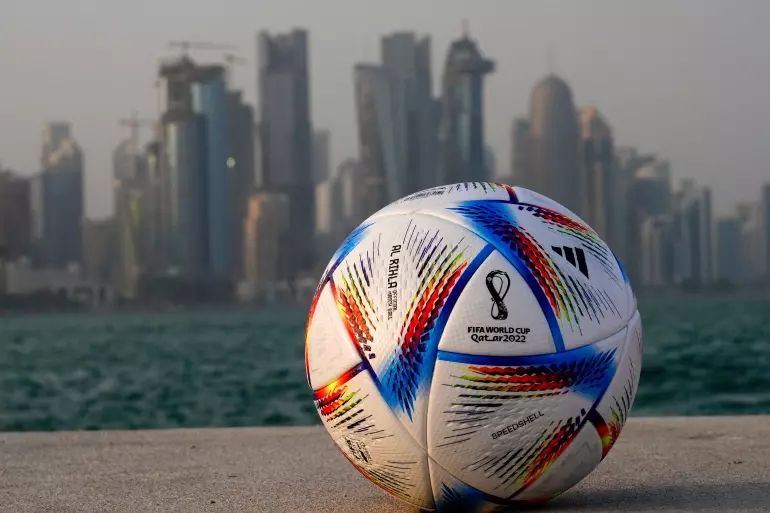
While the 2026 FIFA World Cup will be hosted by the United States, Canada and Mexico, its impact will undoubtedly be felt across the globe.
The Middle East is a prime example. Football in the region received a massive boost after FIFA staged the 2022 edition of the tournament in Qatar.
The tournament will return to the region in 2034, with Saudi Arabia awarded the rights to host the event. The economic effect of staging the World Cup is massive for the Middle East.
Intriguingly, hosting major sports events has forced some countries in the region to reconsider their traditionally strict opposition to gambling.
The best World Cup betting sites 2026 for Arabs will be inundated with new customers this summer as football’s greatest show takes centre stage. Betting is not the only sector which will benefit.
Read on as we take a closer look at how this summer’s World Cup in North America will affect the Middle Eastern market this summer.
How Time Zone Differences Could Impact the GCC’s Young Audience
The 2026 World Cup will feel very different for fans in countries across the Gulf Cooperation Council (GCC), particularly because of time zones and viewing habits.
Fans will be forced to break routine and move out of their comfort zones with many games set to kick off very late at night or early in the morning.
That could mean a lot of casual fans may not be able to watch live matches. They may instead rely on catching up through highlights, social media clips, replays or mobile streaming.
This doesn’t mean that they will lose interest in the World Cup, but the difficulty of keeping up with the time zone difference will likely change how they watch the games.
The younger audience across the GCC will be affected by this schedule, although they are more likely to go the extra mile to catch all the action live.
Saudi Arabia has one of the youngest populations in the world, with an estimated 63 percent under the age of 30. Research shows that a lot of them focus more on individual players than clubs.
Many Gen Z fans follow star players first, and only then care about the national teams they play for. This is more common in Saudi Arabia than in many other parts of the world.
That makes the expanded 48-team World Cup format a huge positive for the fans, with 60% of them rallying behind the new system.
Arab Representation Reaches Historic Levels in 2026
The 2026 World Cup is poised to make waves across the wider Middle East and North Africa (MENA) region, given the record number of Arab nations set to feature in the tournament.
It is a sign that football in the region is getting stronger and more competitive, which makes sense considering that many Middle Eastern nations have invested heavily in sports over the past few years.
Saudi Arabia is an ideal example of this development, considering how much the government has poured into its sporting industry over the years.
Investing in sports is a key part of the nation’s Vision 2030 initiative, an executive plan developed to diversify the country’s primary revenue stream away from energy.
There is still some way to go before kick-off, but excitement for the tournament is already reaching fever pitch across the Middle East.
The previous record of four Arab teams participating in the World Cup was set in 2018, when Saudi Arabia, Egypt, Tunisia and Morocco qualified for the tournament in Russia.
That record will be doubled this time around with eight Arabian nations set to feature at the World Cup - Algeria, Egypt, Iraq, Jordan, Morocco, Qatar, Saudi Arabia and Tunisia.
How the World Cup Will Impact Football Viewing in the Middle East
Football fans in the Middle East will have to find new ways to watch the World Cup, especially for those who aren’t making the trip to North America to watch the action live.
Traditional television will be the primary way to watch the games, but streaming platforms, smart televisions and mobile apps will also be popular.
People will not only watch live games but will also consume football in other ways, such as highlights, short clips, replays, tactical analysis and different language commentary.
That will give fans the flexibility to engage with the tournament at their own convenience, rather than disrupting their schedule to stay up late at night or early in the morning.
Analysts describe this as a ‘catch-up economy’, where attention is spread out across time instead of being focused on a single live moment.
This tweak could also affect advertising as brands may no longer rely on the exposure live TV provides.
To stay ahead of the curve, they will need to reach fans across multiple digital spaces, including social media, streaming platforms, apps and other online environments.
